
Hockey Skills: Skating Basics
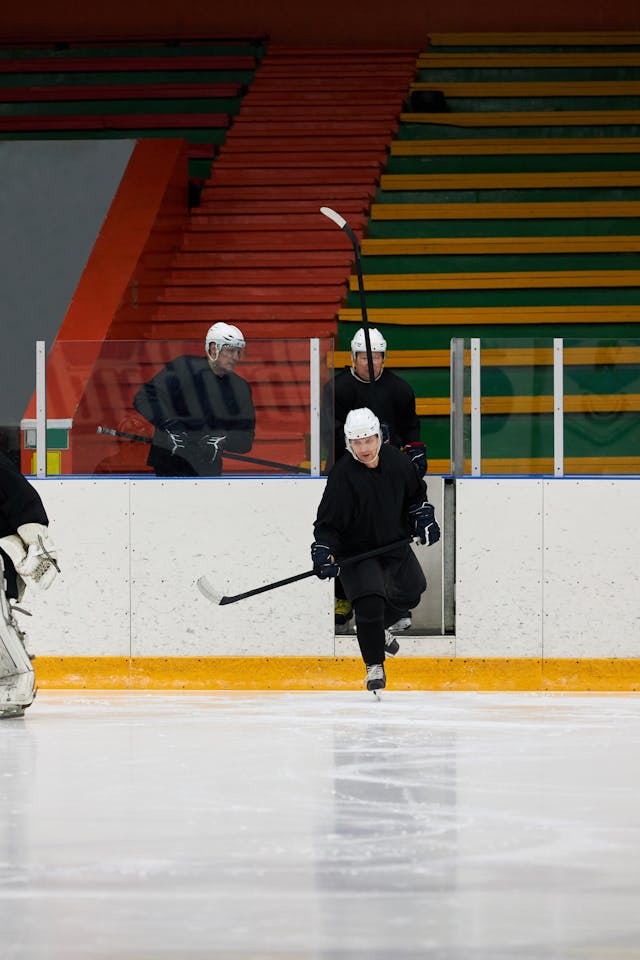
Skating is the foundation of everything in hockey. You can have the best hands and the hardest shot on the team, but if you can't skate, none of it matters. Every skill session should start with edges.
Balance and Edges
Stand on one foot, inside edge. Hold it for ten seconds. Switch to the outside edge. Switch feet. If you're wobbling after three seconds, this is where your practice time belongs — not on shooting, not on passing. Edges first.
Forward Stride
Full extension on every push. Your recovery leg tucks under your body, not out to the side. Knees bent deep — deeper than feels comfortable. New skaters stand too tall because it feels safer. Low centre of gravity means faster acceleration and harder stops.
Crossovers
Crossovers aren't just for turning. They're acceleration tools. Each crossover push generates speed that straight strides can't match. Practice both directions equally. Most kids are strong going left and weak going right. That weakness shows up in game situations.
Stopping
Hockey stops on both sides. Not just your strong side. A player who can only stop one way is predictable. Coaches see it immediately. Parallel stops, T-stops, one-foot stops — learn them all. Then do them tired, because games aren't played fresh.