On-ice curriculum
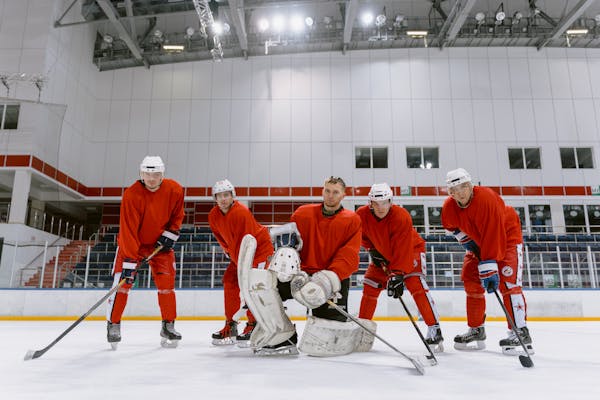
I have to agree with the parents that complain that their kids receive very little attention during practices and games. I am not advocating that everything the team does on the ice should revolve around the goalies. For the most part, all that needs to be done is a little tweaking in the practice plans, and drills to make them more accommodating to goalies. The same goes for the pre-game warm-up.
Skating drills
It is important, especially for young goaltenders, to learn how to skate properly. However, it is even more important for them to become excellent at moving in their crease in their goalie stance. I recommend that when players are doing skating drills, goalies be allowed to spend time working on their goalie movements. For instance, if during a practice, 20 minutes is allocated for skating, then the goalies should do 10 minutes of regular skating and 10 minutes of goalie movements.
Shooting drills
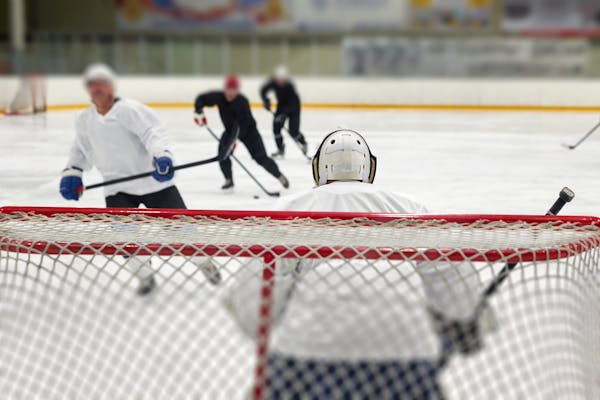
In order for goalies to constantly improve, it is essential for them to practice with the same focus, intensity, and pay the same attention to detail as during games. They have to work on their depth, angles and timing, and execute their recoveries the way they would in a game. That said, one of the main problems with the way shooting drills are designed is that they don’t allow the goalies enough time to work on these skills. Generally, shots come so quickly at the goalies that they often find themselves deep in their net, with no time to go down, and even less to recover to their rebounds.
A simple adjustment in the speed that the coach sends in his shooters will make all the difference.
Allowing more time between each repetition gives the goaltender time to track the rebound and get properly set for the next shooter. A good way to do this is to have the coaches lead the drills by blowing the whistle to signal the shooters that it’s their turn to go. Before blowing the whistle, the coach should make sure that his goalie is up on his feet, properly set, and ready to go.
On drills such as 1-on-0’s, 2-on-0’s and 3-on-0’s, it is important not only for the goalies, but also for the players, to play them the way they would in a game. For instance, on a 1-on-0, coaches should always make sure that their players come down at the goalie with good speed. If the player decides to deke, coaches should insist that the shooter execute the kind of fake or deke that he would try in a game.
On 2-on-0’s and 3-on-0’s, coaches should ensure that players execute simple plays when they cross the blue line. Only one or two passes should be made, and then a good shot should be taken at the goalie, with one or two guys going hard to the net for the rebound.
Pre-game warm-up drills
I often tell minor hockey goalies that in the pre-game warm-up, it’s not the quantity of shots you take but their quality that count the most. If the goalie takes 50 shots in his warm up, but plays none of them the way he would during a game, he will not be ready to play. It would be better for him to take 20 shots and treat every single one as a game shot.
Therefore, just the same as in practices, it is important that the goalie has time to go down in his butterfly, make the save, and recover during the warm-up.
Keep training hard and check back next issue for more of my goalie tips and techniques. And remember… Keep your eye on the puck!
Eli Wilson is the goaltending coach of the Ottawa Senators and is also president of Calgary’s World Pro Goaltending school. |