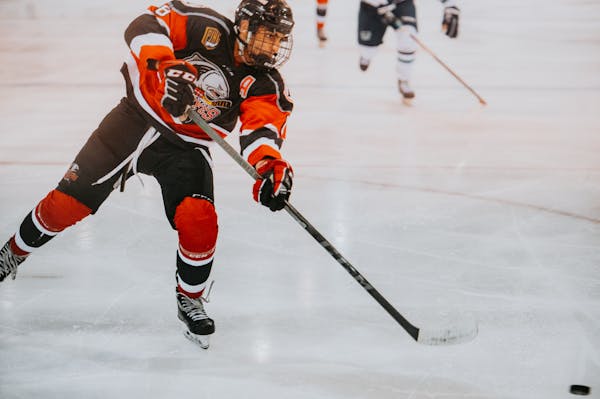
The 4 Nations Cup event Nov. 7 to 11 in Leksand, Sweden was another successful event for Canada’s National Women’s Team.
The tournament featured a round robin format between Canada, the U.S., Sweden and Finland with the top two teams playing in the final game. Canada met the Americans yet again in the final, but it was not a cakewalk for either team.
The USA edged out the Finns 2-1 in the deciding round robin game, while Sweden gave us a tough 5-3 game. We defeated the Americans in the final 2-0 with an impressive performance by young goaltender Shannon Szabados. The Finns scored with 30 seconds left on a 5-on-3 to take bronze and defeat the Swedes.
The 4 Nations Cup serves as an important international event for Women’s Hockey. Happening early in the season, it is a good indicator as to what everyone looks like. It promotes and develops the game. It also serves as a development and evaluation tool for the National Teams who are looking to solidify rosters for the World Championship this April in China.
Perhaps the most impressive team of the event were the Finns, who left their number one goalie behind as well as their top four players, who are playing in Russia this season.
The Finns seem to have improved their team game and played a trap and close checking style that was very frustrating to play against. They skate well and have decent skill. If you are not patient and willing to battle against this style of team, they can really take advantage.
One of the things I enjoy the most about playing hockey in Europe is learning about their culture and history of the game.
The structure of their hockey system could serve as a real example for what we should look at on the women’s side. For example:
1. RELEGATION The Leksand Stars are to Swedish hockey what the Toronto Maple Leafs are to the NHL and Canada. The Leksand Stars, where Ed Belfour is currently playing, are a team in All Svenskan (Division 2).
For many years they have been in the Eliteserien and are hoping to go back up with Belfour’s signing this season. Each season, the bottom two teams of the Elite League playoff against the top two teams of Division 2 in relegation round. The best two teams either move up or stay in the Eliteserien. Imagine the last two NHL teams playing off vs. AHL teams in relegation?
2. FEEDER SYSTEM/CLUB CULTURE All minor hockey is structured from the pro team down. Each pro team usually has a women’s pro team within that structure. Many of them play out of the same arenas and have their own dressing rooms.
In Leksand, they have paid coaches working with their Leksand Stars ‘Youth’ programs as well as a Hockey Gymnasium or Sport school for high school players.
Children grow up a Leksand Star and can one day dream of playing for the pro team. They get a chance to watch these players practise and train and often the minor coaches work with the pro coaches as well.
3. FAN CLUBS/TEAM IDENTITY Just like European soccer, many Pro Clubs have a strong fan base. Leksand has one of the best and hundreds of fans make long trips to away games to watch the team play. In a city of 15,000 people, they average 7,000 per game.
I love playing in Europe because I am always learning new ways to approach the game.
In particular, I admire the way Europeans develop minor hockey coaches, train young athletes and create cultures around their professional teams.
While the women’s game continues to grow overseas, there is a framework there that I think can work in meshing minor girls hockey with the very elite club teams to develop, inspire and financially support the game at all levels.