By Peter Twist /
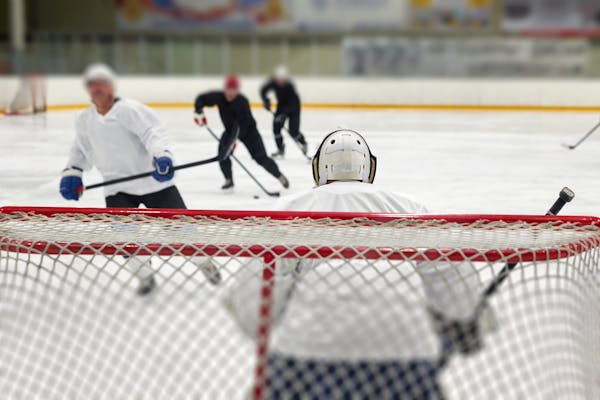
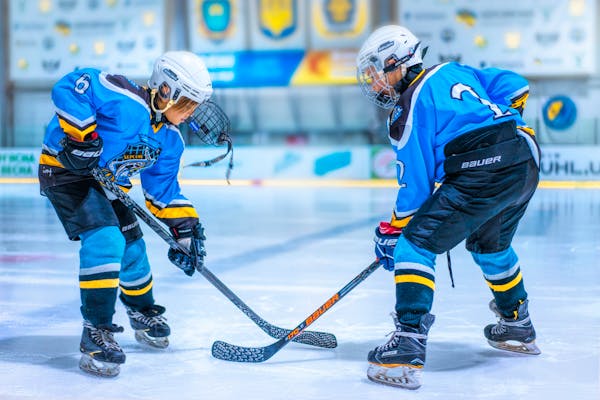
When people think of fitness and endurance, the word aerobics is most often mentioned, in hockey that is measured as V02 max. But hockey is an anaerobic sport. Sprinting, speed, quickness, strength and power are all anaerobic actions. Your anaerobic energy systems fuel your most intense game efforts. High-speed breakaways, stop-and-start penalty killing, body checking, races for lose pucks, shooting and full intensity shifts rely on anaerobic conditioning.
Your anaerobic fuel tank is available immediately but depletes quickly. Intense anaerobic conditioning is needed to extend the time the system can supply high-pace energy before it is depleted, and accelerate the ability to replenish this hockey-fuel. A well-trained anaerobic system is also needed to handle higher levels of dry-land conditioning, producing result-oriented training that is dependent on work load and intensity.
Anaerobic conditioning is most often structured as repeated sprint intervals.
In-season, you can get anaerobic conditioning within practices through repeat sprint drills and stop-start actions. You can also unload from the in-season multi-directional on-ice demands by opting for bike intervals rather than risking overuse injury by adding yet more skating.
There are four key training variables you can manipulate to improve anaerobic conditioning: duration (of each sprint); intensity (defined by the load, speed, heart rate and effort); density (amount of between-sprint recovery); and volume (total number of sprints by time).
Begin with six 30-second intervals with a 1:4 work to rest ratio (W:R), always using active rest to recover between each sprint interval. Add two more intervals per workout until you are completing 12 sprints. Next, add more resistance. Focus first on maintaining the interval length, resistance, tempo and volume with good mechanics. Then add more speed to each sprint. Next, progressively decrease the rest intervals until a 1:1 W:R is achieved for all 12 reps. If speed drops too greatly, remain at a certain stage, retaining the same structure. The goal is to eventually handle 60-second sprints at a 1:1 W:R.. If you have trouble graduating to a longer interval, regress to a 1:2 W:R enabling you to complete a longer sprint. Once you can handle the volume, begin to whittle down the rest times until a 1:1 is achieved. At the end of the entire anaerobic program, peaking before playoffs, you can handle long sprints and shortened recovery phases to build lactic acid tolerance, extending the time you can go full out into a shift. This also improves your mental ability to generate and coordinate powerful efforts in the face of anaerobic depletion and lactate accumulation (when the legs become fatigued, heavy and sore).
Remember, in hockey, there is an added energy cost to falling and quickly regaining positioning, sprinting full out after sitting still on the bench for 20 minutes, to fakes and dekes and turn backs and other deceptive moves, shifting gears to throw off defenders, stopping and starting on the PK, and experiencing pain and playing injured. All of these situations cost more energy than researchers have documented, and we already confirm that hockey is an anaerobic sport. It is impossible for your anaerobic system to be too highly trained. Your VO2 must also be high, but not at the expense of your anaerobic system. Build a strong aerobic base, then preferentially train your anaerobic system all season long. |