By Ryan Walter /
Question:
“Ryan, over your many NHL seasons how have you observed high level coaches get the most out of players?
- Jon
Answer:
Jon, my past 45 seasons of life have given me an amazing vantage point from which to view many different team situations and many different leadership styles. For 25 years now I have played or closely observed the National Hockey League. Over this time I have also built two businesses and I now train many organizations, executive groups, and companies. I have observed that leaders and coaches can break their people or players into two defining categories:
FANS, and PLAYERS
Fans, in the literal sense of the metaphor, are in the arena, interested in the outcome, and excited about the general momentum of the event but they never seem to energize themselves to make a significant difference in the game. They are sitting on the sidelines. They see a lot of what is happening, but from a distant vantage point where they get closer to eating hotdogs than being part of the game solution. The fan mentality is a critical indicator that the leader or coach must spend individual attention to his or her team.
Any time a player or employee gets injured or emotionally or intellectually disengages from the team or its vision, that player then becomes what I call a fan. Fans take up space and even at times cheer the home team on, but more often than not they become a non-engaged piece of the team because they feel that they are not connected for what-ever reason.
Leaders need to be continuously on the lookout for broken relationships, disconnect or potentially “injurious words” said within the team dynamic that can contribute to the player-to-fan transition.
Many people and players “work retired, they quit, but show up every week for the money.”
Leaders need to watch for drops in player enthusiasm.
Change in this area often comes from unresolved conflict. If they have not confronted their problem, but succumbed to it, they are in danger of losing their enthusiasm for their team and life. At times the leader’s job is to reconnect, confront and restore.
Ralph Waldo Emerson
“Enthusiasm is one of the most powerful engines of success. When you do a thing, do it with your might. Put your whole soul into it. Stamp it with your own personality. Be active, energetic, be enthusiastic and faithful, and you will accomplish your objective. Nothing great was ever achieved without enthusiasm.”
So how do players regress to fans and how do we repair their standing and re-ignite their team energy?
This is where the leader’s and coach’s hard work comes in. Recently, when writing our first book (watch for our newest book Simply the Best Players on Performing) I checked in with an old coach of mine Danny Belisle (coached me in Washington.)
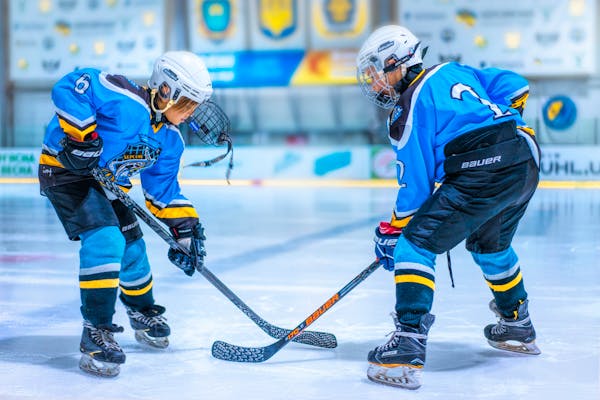
I suggested to Danny that he really did a good job building my confidence in my very first game in Chicago. I was a rookie that season and loved every minute of playing time that I received that game. Then near the end of the game with under a minute to go Danny Belisle my coach tapped me on the shoulder and said go win the faceoff kid.
The faceoff was a critical one because the game was tied 2-2 and the faceoff was in our end of the ice. I arrived at the dot and looked up to see that I was going to be facing off again Stan Mikita one of the Blackhawks all-time greats. I tied up his stick, we won the face-off and our team tied the game. My coach had helped me be on top of my game. But as I talked with Danny these many years later he told me that keeping players fully engaged in the team game was more complicated than that.
He said when I put you on the ice to take the faceoff I brought off the ice a 32-year-old Guy Sharron, and when I did that I lost him. Danny built my confidence and by accident disengaged another player. Twenty years later Danny was still thinking about it.
He said, “in hindsight, what I should have done was put you on at center, move Guy to the wing and take the winger off the ice.” Coaching the moving parts dynamics of a team is not easy and often complex.
Leaders, work hard at having 100 per cent of your players engaged and not disengaged where they are better off being in the stands as FANS.
Ryan Walter played 15 NHL Seasons, won a Stanley Cup and has a Masters Degree in Leadership/Business.
He works with players, teams and Minor Hockey Associations, synergizing teams and growing tomorrow’s leaders. Ryan also speaks at conferences and does long-term performance/team development work with corporations and organizations across North America. For information on booking Ryan or to purchase his books contact Ryan at [email protected] or go to www.ryanwalter.com.
|