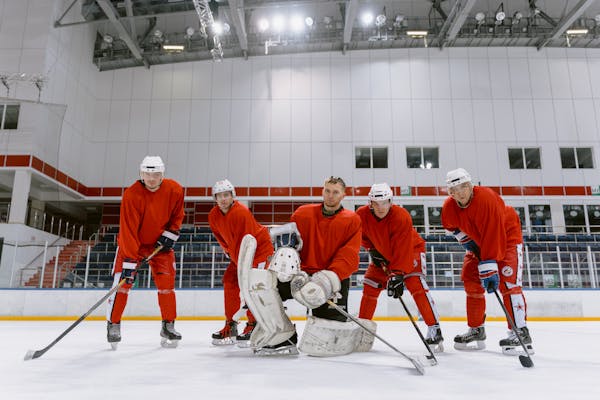
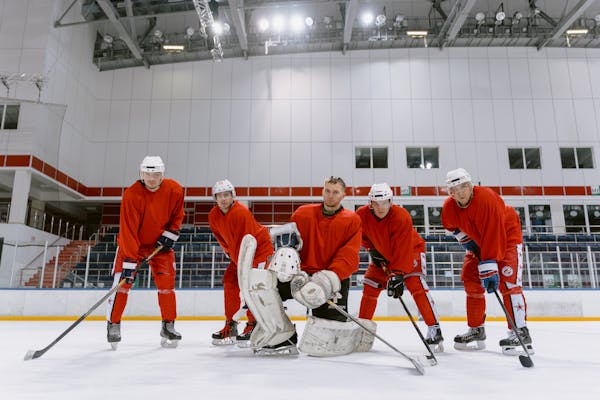
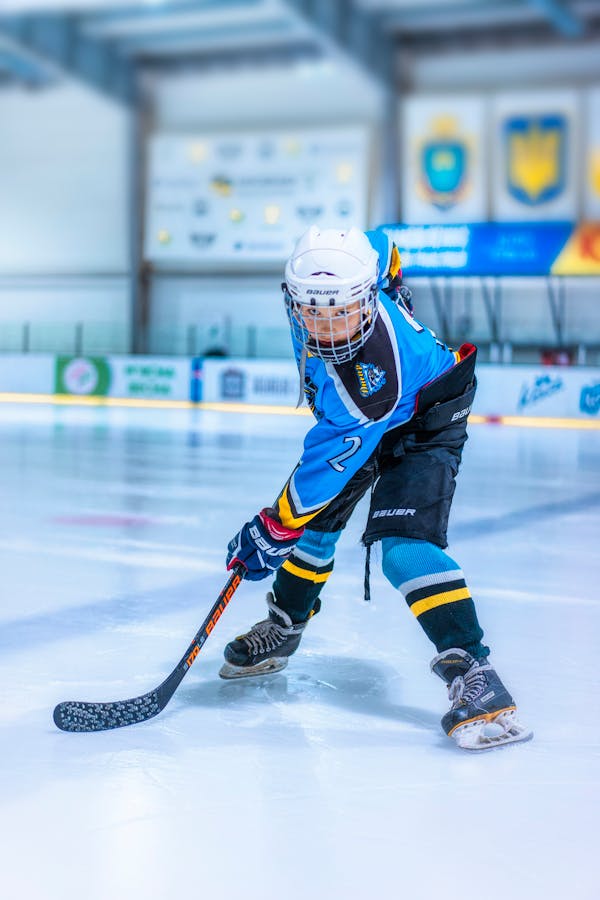
Professional hockey players are serious about their sport and focus on the training and development of their “physical machines” year round. Sport conditioning has evolved into big business with the development of branded shoes, clothing, equipment, print and TV media that profiles the training programs of pro athletes. If the pro athletes train this way, shouldn’t every serious athlete do the same whether they are eight or 18?
Parents who are passionate about their children and their hockey are fueling a new segment of the sport conditioning industry focused on programming for children and youth. However, young athletes cannot just be treated like miniature adults. The training program must be age appropriate and follow documented growth and development strategies.
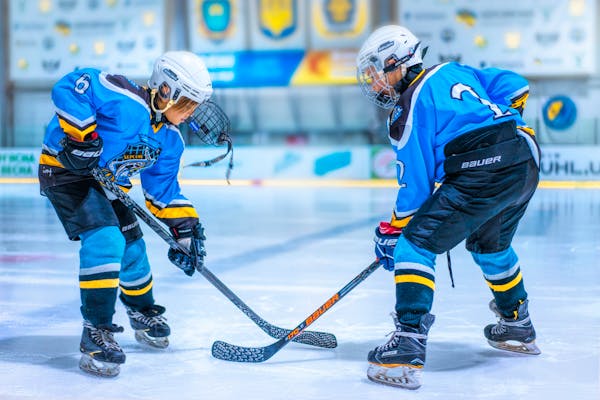
Through the first 20 years of life, a child evolves and grows into an adult. The changes that occur impact the athlete’s physical, emotional, psychological and social development impacting every aspect of life and hockey. There are predictable phases of change that every child experiences, but the amount of time in each growth phase is diverse, leading to a great deal of variability among children. Just observe a Peewee or Bantam hockey game and the size differences are obvious. The brain and nervous system is constantly changing and adapting based on experiences creating information pathways between the mind and the muscles.
Peak changes in this system occur between birth and eight-years-of-age, where children develop gross and fine motor patterns that become the foundation of hockey skills and other recreational activities. Children grow gradually until age 10, where a major growth spurt creates a high velocity height change until age 14, as the long bones grow creating gangly arms and legs most characteristic of teenagers.
During this time, there are minimal changes in the muscular system creating a scenario of long levers without adequate muscle size to control them. This is a critical time for injury along with a disconnect between mind and body.
Gradual change in the muscular system is evident until age 14 where circulating hormones directly linked to puberty are activated creating a surge of muscle growth from age 14 to 18.
The volume of muscle growth is higher for males than females, but both sexes experience increases that help to provide strength and control for adult size bodies. By age 20, the major physical growth has reached a plateau.
Hockey coaches focus on helping players develop hockey specific skills (skating, shooting, body contact) along with the individual and team strategies and tactics required for success. A sport conditioning coach focuses on the development of athleticism whereby they improve an athlete’s physical tools that support hockey skill execution.
Enhancing athleticism comes from the development of the secondary characteristics of fitness including: balance, agility, speed, power, coordination, body awareness, and reaction skills.
To have the greatest impact, sport conditioning for hockey should help players improve athleticism as their bodies grow and change. Skills and drills that are great for Midget players are not appropriate for Atom players because younger athletes lack the mind-to-muscle coordination required for executing complex movements at high tempos. Age and ability appropriate training can help players improve performance on and off the ice, so parents and coaches are encouraged to choose programs specifically designed for children and youth.
Peter Twist, 11-year NHL Conditioning Coach, is President of Twist Conditioning Inc., a company that provides franchised Sport Conditioning Centres, Smart Muscle™ Hockey training products and home study coach education. www.twistconditioning.com |