No athlete likes to be injured, out of games, away from the regular routine with their teammates.
Careers can turn on a dime after injury, development delayed, opportunities lost, durability questioned, practice time lost, confidence damaged.
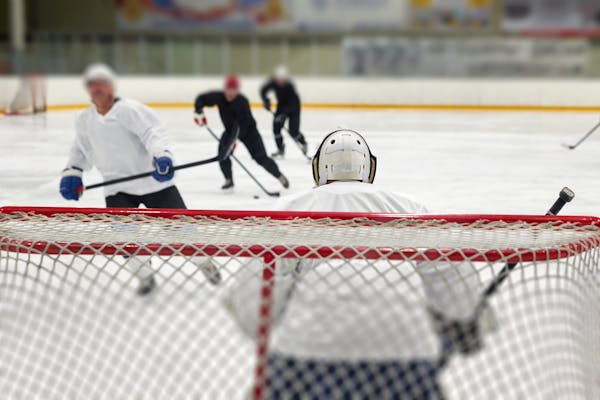
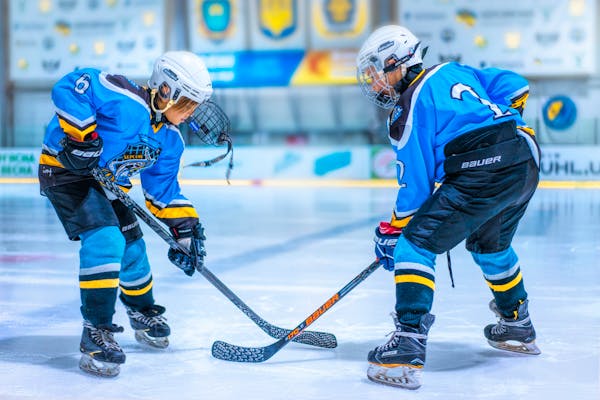
In a high-speed collision sport, the sheer size, strength and power behind bodychecks and incidental contact with opponents, boards and net may cause injury. Any time athletes push the boundaries of human performance, cutting sharper at higher speeds for example, injury awaits those who exceed the threshold achieved through training. Explosive agility imparts intense stress on the muscles and joints particularly with a sharp skate blade cutting into the ice at ground level while at the same time the arms atop the body absorb forces delivered from opponents—there is a lot for the body to handle.
Be aware of the common, preventable causes of injury and likewise harness the training ingredients which best prepare your body to withstand the rigours of a well-competed game of hockey.
Traditional Training Styles: Traditional machine-based strength training and free weight muscle isolation exercises can build a beautiful body like a body builder or fitness model but as a hockey player you are actually after a body that has the physicality for high-speed action and intense one-on-one battles. Use whole body, multi-joint lifts and movement-based training to develop a more functional, reactive body able to navigate chaotic game demands. We call this Smart Muscle™ training.
Unbalanced Body: Past injuries, leg length discrepancies and imbalanced stride patterns can all produce compensational shifts in the body which leave your muscles and joints in need of a tune-up. My athletes perform regular self-massage with a Travel Roller™ (see photo) which relaxes muscles and the cocoon like myofascial covering both which become restricted after receiving blows from bodychecks, sticks and boards. Fatigued muscles also need relaxing to function well.
Roll each muscle by slowly moving your body over the Travel Roller™ to release each muscle and regain flexibility without stretching.
High Velocity Direction Change: Injuries often occur during high-speed braking and when exploding out of a stop-and-start. A full sprint into an immediate stop imposes over 1,000 pounds of force on the knees. Balance drills, agility, footwork, movement skills and plyometrics, with solid dryland coaching for improved mechanics, can help prepare players for these extreme demands and turn an injury risk into a strength—becoming more evasive and confident in the durability of your body.
Hockey injury prevention training moves progressively through a continuum of slow strength, stability, mobility, range of motion, deceleration, transitional balance, movement skills, multiple joint angle power initiation, stop-start coupling and reactivity skills and drills.
The key of course is to train with a style and methodology which will prevent most injuries and optimize performance. Visit and observe Twist athletes in action to see how athletes become their best and most durable so they avoid injury which robs them of critical development and enjoy more game-time playing their best.
Peter Twist, 11-year NHL Conditioning Coach, is now President of Twist Sport Conditioning Centres, running hockey camps in Vancouver, Burlington, Whitby and Ottawa. www.twistconditioning.com |