By Peter Twist /
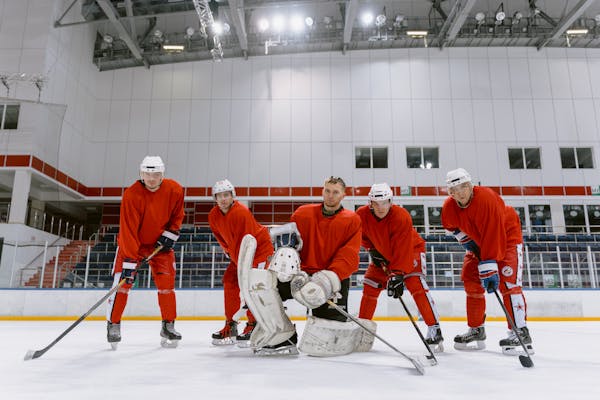
Explosive agility and reactivity allow small athletes to prosper in a big man’s game and give large mass players another dimension to their game. Both require the skills to perform complex manoeuvres very rapidly.
Small players use reactivity as the point of difference to provide a competitive advantage in lieu of size and absolute strength.
It permits them to evade hits and survive the game, and is an asset that gives them an edge in one-on-one tactics. Large power players improve reactivity to move their large mass well enough to counter fluid and explosive opponents.
The game is getting faster. Extend your arms straight out to your sides and note the distance from left to right hands – quick hockey actions are often executed within this fingertip to fingertip distance and is expressed as agility and reactivity.
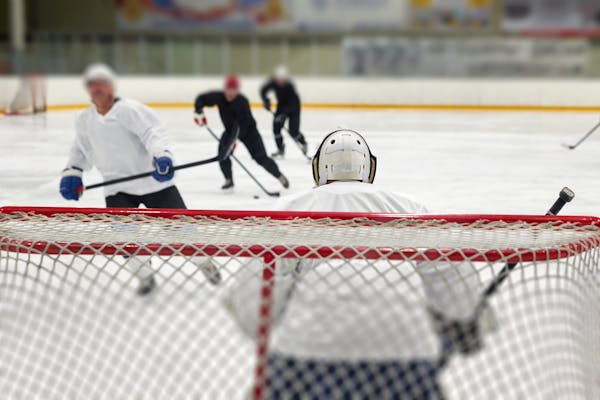
Remember that each moment in a hockey game is completely unpredictable, the events on the ice change suddenly, so players must be able to quickly shift their body position, whether carrying the puck, trying to get open for a pass, or defending the net from attackers.
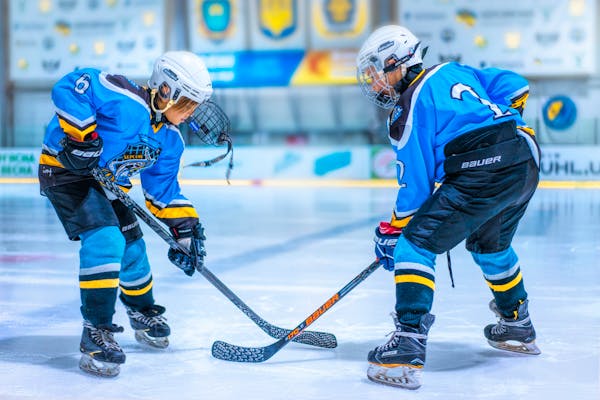
Nowhere is this more evident than within one-on-one tactics. Defenders face the demand of controlling their high speed to suddenly stop on a dime and explode laterally to contain an opponent.
Likewise, the offensive player will cut and turn and zig zag to evade a defender. Reactivity is a distinct ingredient in the recipe for superior on ice movement.
The ability to read a play comes with experience, and that sixth sense that Wayne Gretzky was blessed with. The ability to react is a neuro-physical skill that can be trained.
Developing and enhancing reaction skills allows players to maximize deceptiveness for offensive moves, react quickly in defensive situations and develop the ability to shift gears quickly and efficiently.
The difference between successful completion of these movement-based drills and actual game performance is the ability to perfect these movements in the confined space of most game situations.
Visual and auditory recognition, decision making and the motor responses that are measured collectively as reaction time can be integrated into workout and practice drills through a variety of coaching methods.
Reacting to coach’s cues
Players key on the coach for visual cues (pointing in the direction the athlete should go), verbal cues, (coach yelling, “left, backwards, forwards, right”), or audible cues (whistle). The athlete is forced to process these cues and react appropriately to the given situation.
Reacting to an opponent
Shadowing or mirroring drills also develop situational decision making skills as the athlete is instructed to shadow their coach or workout partner and react as quickly as possible by mimicking their changes in direction, speed and movement patterns.
Athletes alternate between being on offense and defense during these drills in order to develop strategies and movement skills for both offensive and defensive tactics. These head-to-head unpredictable drills add elements of competition, fun and intensity to the training environment.
Peter Twist, 11-year NHL conditioning coach, is now president of Twist Conditioning Inc., a company that provides franchised Sport Conditioning Centres, hockey training products and home study coach education. Please visit www.twistconditioning.com for more information. |