By Dean McIntosh /
Each year in the Canadian hockey system close to 3500 minor hockey associations undertake the task of placing players on teams. The ultimate goal of this process is to provide players with the best possible experience in an environment where they can grow as hockey players and young people.
Player evaluation can be one of the most difficult tasks for a Minor Hockey Association to deal with. However, when done properly, it can also serve as the foundation an association is built upon.
In many cases the singular purpose of player evaluation is to place players onto teams. But an important component that may be missing in many cases is that Minor Hockey Associations fail to use the outcomes of player evaluations to support coaches in developing players based on the individual strengths and needs after the evaluation process has concluded.
Placing players on teams is one thing, but what is done with players once the teams are formed should be connected to the evaluations that take place at the start of the season and the information that is generated by the evaluators.
Having a solid player evaluation process in place can help make the process much easier. Not only will it give the association a reference point in communicating with players and their parents, it will also give coaches a starting point to determine where players’ skills are at and what type of instructional programming will best meet everyone’s needs.
For most Minor Hockey Associations there are two types of evaluations.
1) Evaluations during pre-season for selection on to teams. (Tiered or Grouped)
2) Evaluations at the end of the season as a post season report card.
Although both are important, it is what is done with the information that really matters the most. Information from the evaluation process must be passed on to coaches to provide a framework for the types of practices players will require base on their strengths and needs.
Another key component of the evaluation process is to circulate the evaluation criteria evaluators will consider when observing the players during these ice sessions prior to the start of the process. Parents should be aware of what players are being judged on. Criteria must be clearly defined, objective and justifiable.
Objectives of the Player Evaluation process
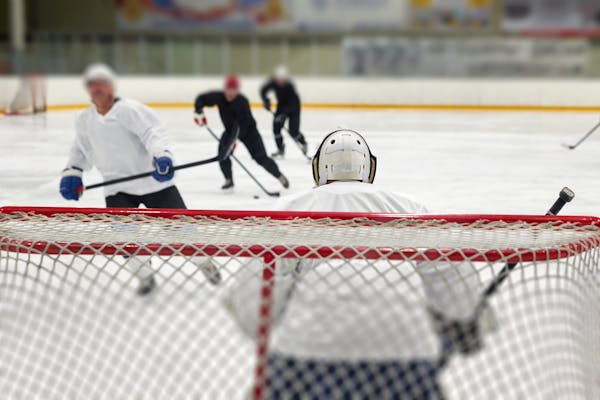
Provide a fair and impartial assessment of a player’s total hockey skills during the skating and scrimmage sessions.
Ensure players have a reasonable opportunity of being selected to a team appropriate to their skill levels as determined during the on-ice evaluations of the current year.
Provide coaches with the opportunity and flexibility to build a team based in part on their own coaching philosophy and knowledge of player skills and attitude.
Provide uniformity and consistency in the evaluation process such that a player and parent expectations are consistent from year to year as players move through the various levels of the minor hockey association’s programs.
Form teams to maintain balanced and competitive play where the athletes can develop and participate equitably and have fun playing hockey during the season.
Provide feedback in order to develop players.
Minor Hockey association leaders must manage all aspects of player evaluation in a way that makes the process as transparent as possible. Evaluator objectivity, clear and concise lines of communication, effectively run ice sessions, and a succinct feedback mechanism all play a vital role in developing an effective player evaluation process.
For more information coaching and player development visit the Minor Hockey section of the Hockey Canada website at: www.hockeycanada.ca |