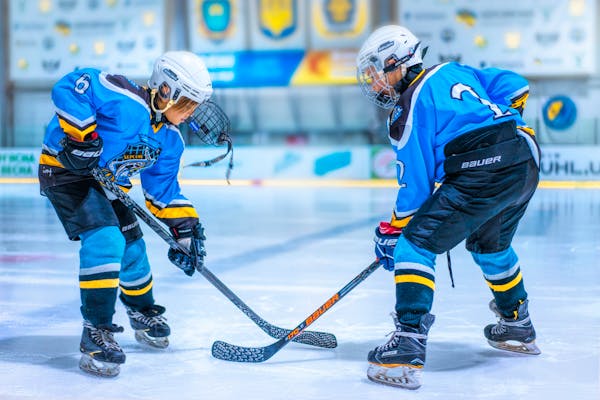
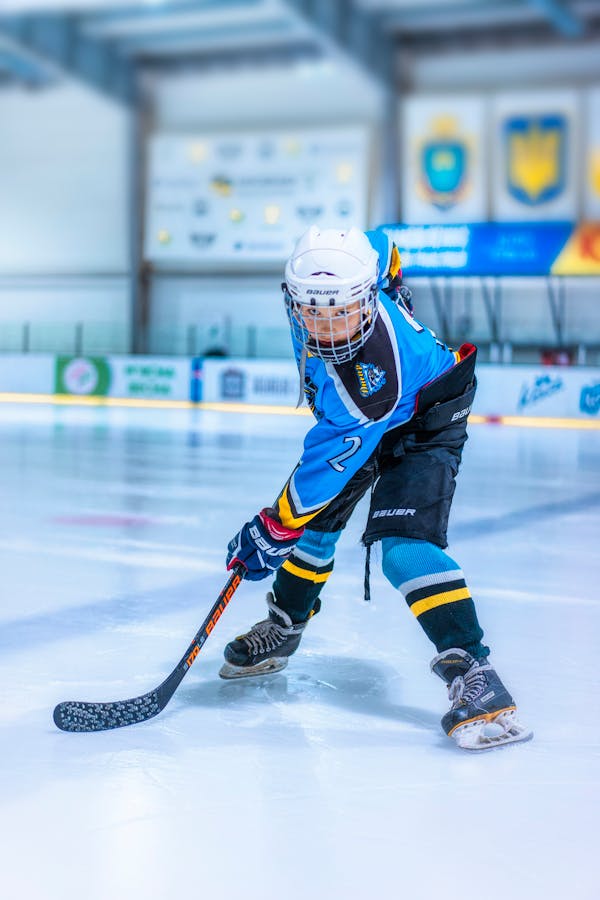
Most motivated young players want to know what they can do to improve their game.
Training methods today increase strength and speed to improve skills, one-on-one tactics, and overall game performance, not just because a player has better fitness to fuel their skills, but also because the training has helped them become a better hockey player.
The goal is to train a player off the ice and deliver an improved athlete who can better capitalize on the on-ice instruction.
Several years ago, I tested a small group of players on the ice for one-length speed, blue-to-blue quickness, red-to-blue stops and starts, agility, shot velocity, shot accuracy, and balance.
Players then participated in a six-week dryland training program with no on-ice training at all.
At the end of the sixth week, players got a feel for the ice again in three short sessions so they could safely attempt best-effort on-ice tests again.
After the six weeks of dryland training, all test results improved.
Did I mention that all on-ice tests improved?
New hockey training programs focus on the secondary characteristics of fitness including dynamic balance, speed, agility, quickness, movement skills, and full-body reaction skills.
This training takes muscle size, strength and fitness gains, and applies them toward better skating, shooting, passing, checking, stops and starts, pivots, crossovers and playing one-on-one at a higher intensity.
The right exercises with the right coaching can take your off-ice gains and see them expressed on the ice as improved play.
Dr. Jack Blatherwick, an exercise physiologist and world-renowned hockey researcher, reported on a time-motion analysis for a typical minor hockey player.
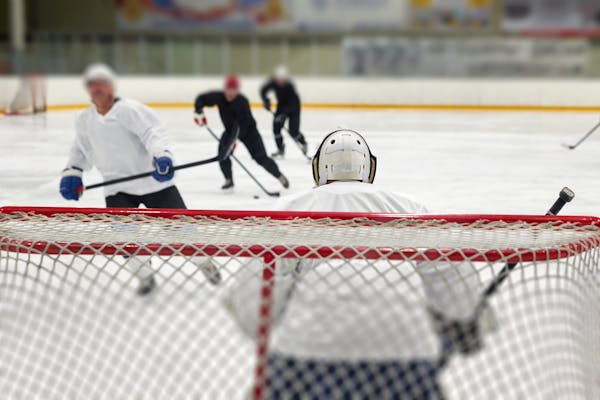
In a 60-minute squirt hockey game, a below average forward only touched the puck seven times over nine shifts.
A defenseman controlled the puck more with 11 possessions averaging 2.6 seconds for a total puck handling experience of 29 seconds. He was stationary most of the game, either at the offensive blueline or in front of his goalie, and he skated fast twice all game, racing from the far blueline back to his own net.
Game competition teaches positioning, timing, decision-making, team play, tactics, courage, camaraderie and other attributes. But young players receive little chance to improve their skills and athleticism.
Even pro players are de-conditioned at the end of a season, in poorer shape than training camp. Young players need fewer games and more development time to stand apart years later.
To build fitness, improve on-ice movement skills, and reach individual potential at any age, I highly recommend players use a diverse training plan like a decathlete.
Hockey players need aerobic and anaerobic conditioning, speed, quick hands and feet, agility, reaction skills, balance, deceleration skills, multi-joint strength, whole-body power, rotary power, and dynamic flexibility, each trained specifically for the unique characteristics of hockey.
Consider carrying a stick, handling a puck, passing, shooting, body-checking, blocking shots, warding off opponents, stopping and starting, backward skating, moving laterally, pivoting, constantly changing direction and you begin to understand the physical complexity of the sport.
For young players, a dryland program that improves physicality and core hockey abilities leads to self efficacy—the feeling of “I can do it”—making them more successful on the ice and bringing more game enjoyment.
Successful players are more likely to stay in the game.
Most importantly, if they keep training and playing hockey, the probability of participating in fitness and sport for life increases.
Over the coming season, I am pleased to author hockey-specific conditioning articles on behalf of Hockey Now to illustrate exercises you can do yourself and also to provide a snapshot of the hockey training elite players commit to in order to be their very best.
Good luck with your season!
Peter Twist, 11-year NHL Conditioning Coach, is now President of Twist Conditioning Inc., a company that provides franchised Sport Conditioning Centres, hockey training products and home study coach education. Check out www.sportconditioning.com |