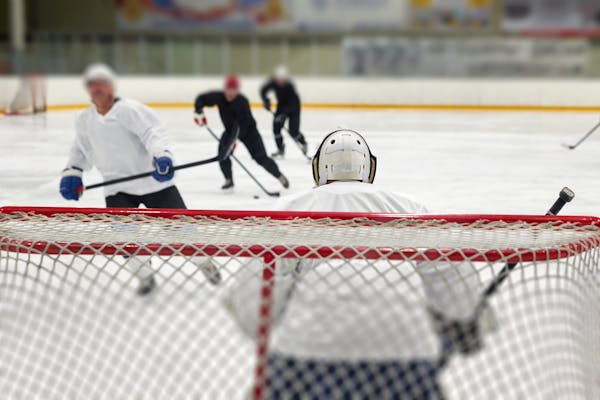
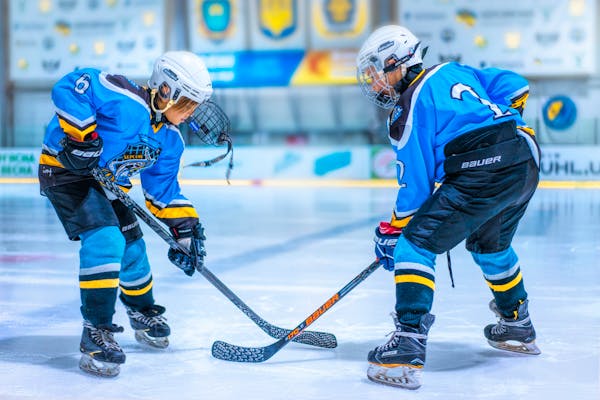
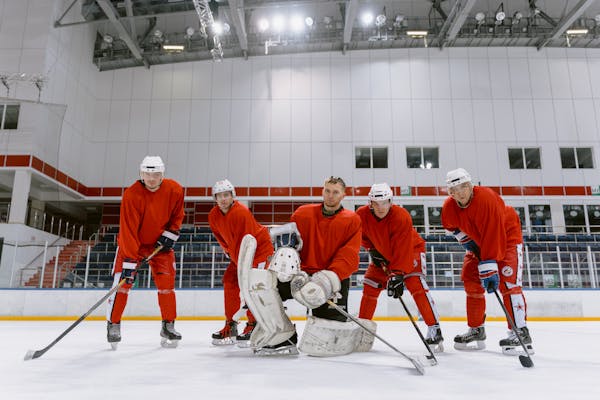
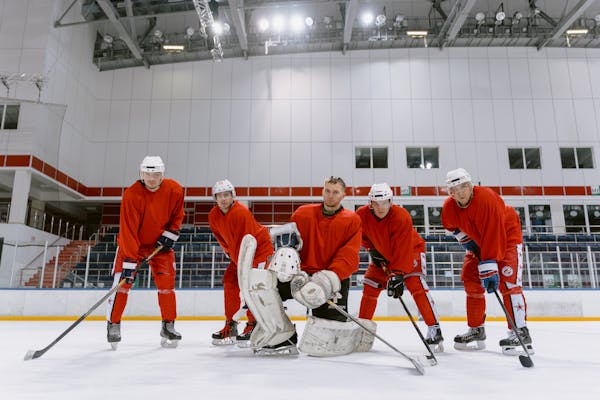
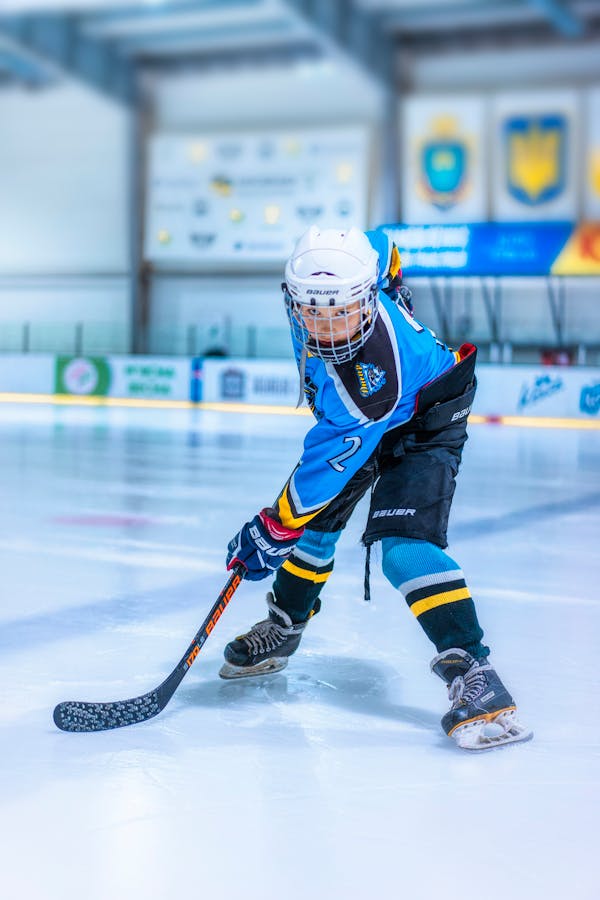
The ability to power through defenders, absorb bodychecks, brake high-speed skating to cut on a dime, and hold off opponents is all grouped under the common coach-speak urging players to be “strong on your skates.” On the ice, you are rarely in a static perfect balance posture. Holding and regaining balance during dynamic action while receiving forces imposed unpredictably by the other team requires excellent core strength and ankle reactivity.
Standing core
Remember when everyone used to do hundred’s of sit-ups? Okay, that never happened – but for the minority of athletes and general public who actually worked out, the path to ripped abs was through a variety of boring sit-ups and crunches. There was so little thought put into this, the focus was more on exercising for lean and ripped abs versus performance, going more for the ‘burn.’ On the ice, you need to use your torso in a standing position through full and varied ranges of motion.
Step 1: standing static holds
A safe foundation of standing core strength is built using isometric (static) holds. You need a strong static core, built in standing positions, to get better leverage from your legs and arms.
This skill applies when driving to the net warding off a defenceman, as well as quick snap shots and full slap shots, or just before receiving a bodycheck. We know that strength is better developed by increasing loading to quickly fatigue muscles as opposed to high repetitions that can deliver muscle endurance but little gains in power. The exercise must be challenging enough to fatigue your torso in the 8 to 15 rep range.
Step 2: slow rotary braking
When an opponent gains a step on you, if you are out of position you may need to place your arm out to the side to slow them down. Your core must have this specific strength to slow down, brake and contain opponents. Take your static hold exercise, move the load out and away from your midline, and slowly rotate under control. Heavy strength tubing is preferred over dumbbells because the line of pull is across the torso, whereas dumbbells impose straight down gravity fed loading that hits the shoulders more than abdominals. Be sure to select long six-foot tubing, long enough to accommodate whole body, athletic mechanics.
Complete separate exercises with only one foot atop the convex surface of a BOSU Balance Trainer. Challenge yourself with timed holds (who can hold the longest). Alternate from left to right leg, landing small jumps on one leg with flexed knees in skating ready position and earn your balance by levelling the foot through ankle reactions. This strengthens the muscles that cross the ankle and permits you to not only be strong on your skates, but strong in your skates.
On-ice stability is best influenced with core and ankle strengthening drills, keeping you up on your feet with the quick strength to execute sharp skating manoeuvres.
Peter Twist, 11-year NHL conditioning coach, is president of Twist Conditioning Inc, a company that provides franchised Sport Conditioning Centres, Smart Muscle™ Hockey training products and home study coach education. www.twistconditioning.com |